

Best Mandir Direction as per Vastu for Good Luck
| May 18, 2026A mandir at home is far more than just a place for puja,it is the quiet corner where peace begins, our daily prayers feel deeply personal, and the energy of the home feels complete. In most Indian households, the day starts and ends right in front of the deity. It is a beautiful ritual that grounds us. Because this space holds such deep emotional and spiritual value, its placement inside your home matters immensely.
According to Vastu Shastra, the ancient Indian science of architecture, the direction of your mandir influences how positive energy flows through your living space. A well-placed mandir acts like a spiritual anchor, inviting good luck, harmony, mental clarity, and prosperity. On the other hand, poor placement can make the space feel cluttered or heavy, disrupting that essential sense of calmness.
The best part about Vastu is that it can be adapted to modern homes very easily. You do not need a large dedicated pooja room to create a spiritually uplifting environment. Even a small prayer corner in a compact apartment can feel calm and sacred when designed thoughtfully with proper lighting, clean surroundings, and functional décor. Many modern homeowners now prefer elegant and space-saving solutions available through to create stylish mandir setups that blend beautifully with contemporary interiors while maintaining spiritual warmth.
Why a Vastu-Compliant Pooja Room Matters ?
In Vastu Shastra, a home is viewed as a living organism that breathes in energy. The pooja room acts as the heart of this system, generating and pumping positive vibrations (Sattva) throughout the entire house.
When you align your mandir according to Vastu, you are not just following a ritual—you are optimizing your environment. A properly placed prayer room serves as an emotional refuge. It helps clear mental exhaustion, lowers stress levels among family members, and establishes a disciplined, peaceful routine.
It ensures that the efforts you put into your career, relationships, and health are not blocked by stagnant, heavy energies within your own four walls.
Best Direction for Mandir as per Vastu
When setting up your sacred space, here are the three best directions to choose from:
1. North-East Direction (Ishan Kona) — The Best Choice
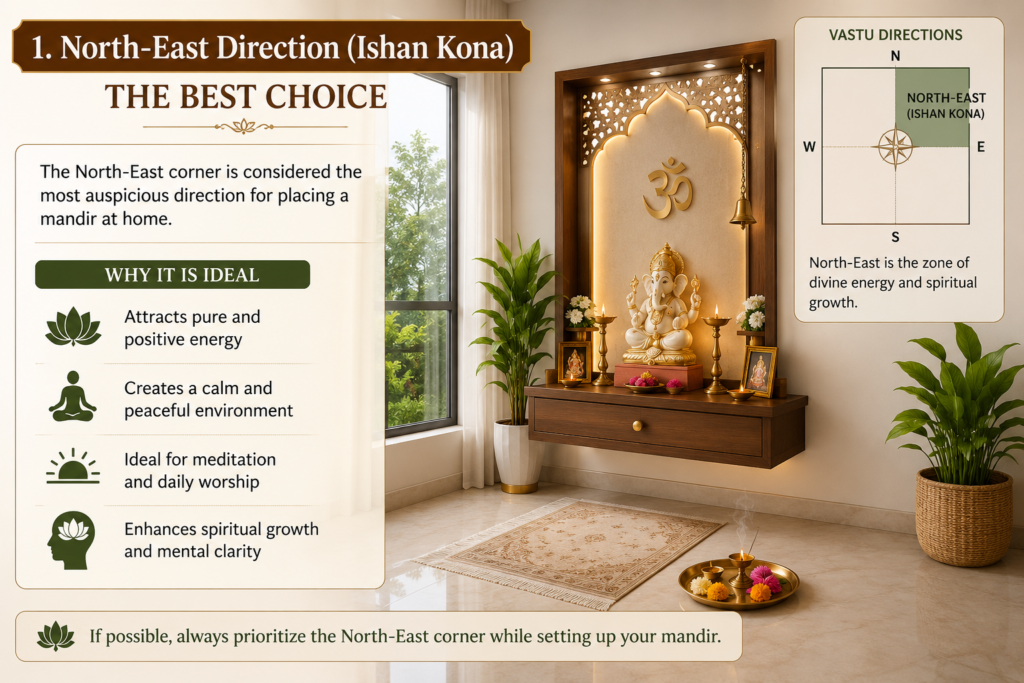
The north-east corner is universally considered the most auspicious direction for a home mandir. It is known as the zone of divine consciousness.
Why it works:
- Attracts pure and positive energy
- Creates a calm and spiritual atmosphere
- Ideal for meditation and daily worship
- Enhances peace and mental clarity
Pro Tip: If you are planning a new home layout, give this direction your top priority.
2. East Direction — The Path of Progress
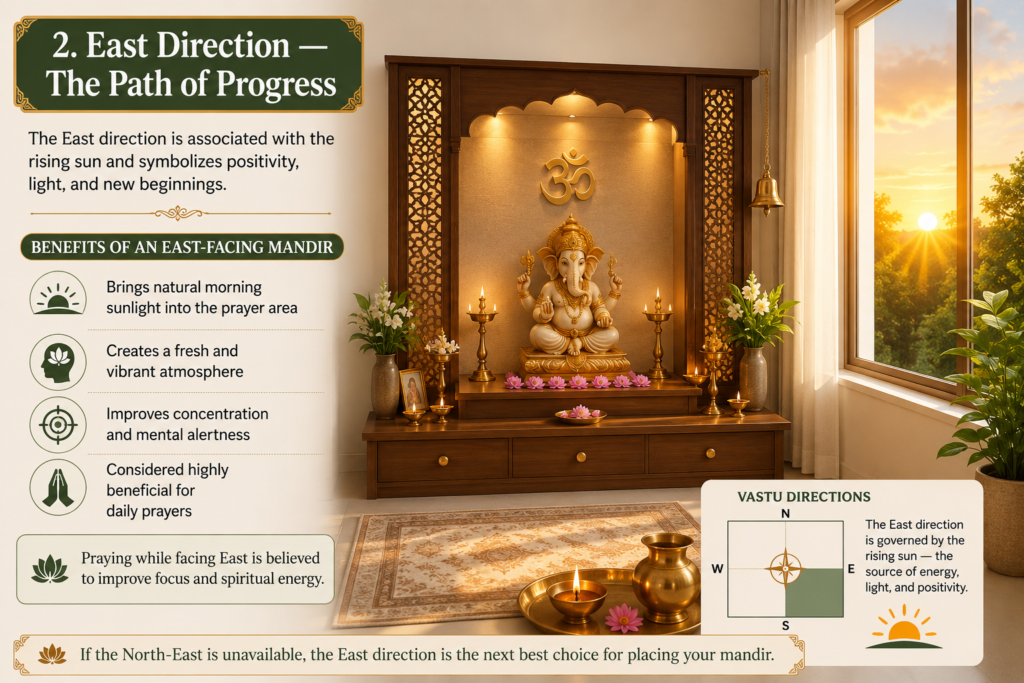
The east is governed by the sun, making it a direction of life, light, and new beginnings.
Why it works:
- Allows fresh morning sunlight into the mandir
- Keeps the space vibrant and pure
- Improves focus, memory, and alertness
- Encourages positivity and growth
Pro Tip: Facing east while praying is also considered highly beneficial in Vastu.
3. North Direction — The Zone of Prosperity
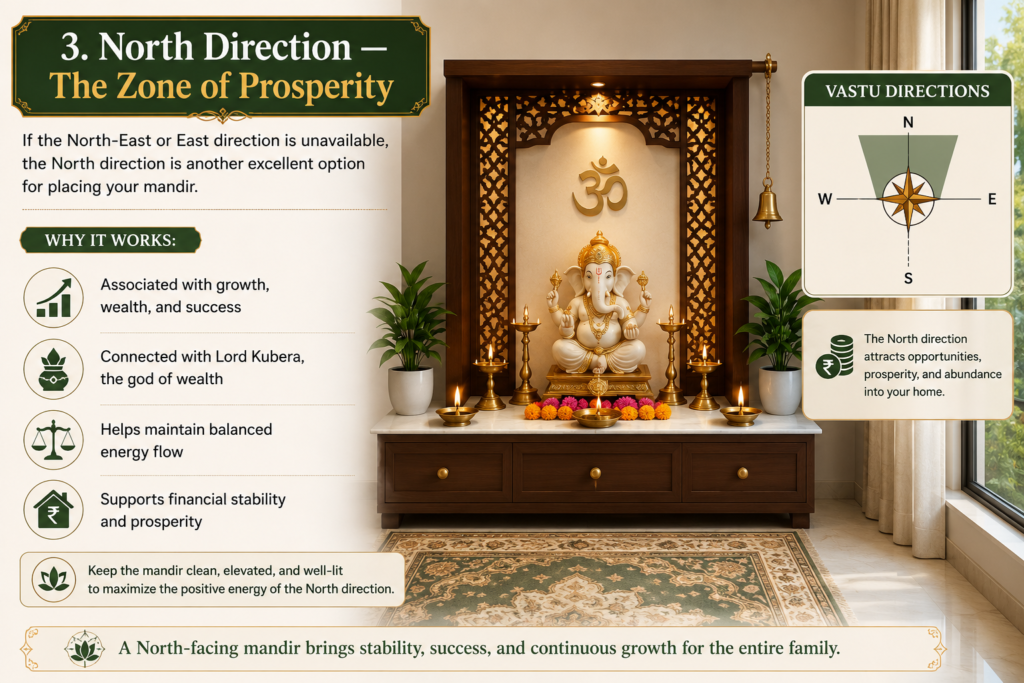
If the north-east or east corners are unavailable due to your home’s structure, the north is your next best option.
Why it works:
- Associated with Lord Kubera (god of wealth)
- Supports financial stability
- Encourages growth and success
- Maintains balanced energy flow
- Directions and Locations You Should Strictly Avoid
To protect the purity and positive energy of your mandir, keep it away from areas that carry heavy or negative vibrations.
Avoid These Placements:-
Under Staircases
Walking over a sacred space disrupts its peaceful vibration.
Next to Bathroom Walls
Bathrooms introduce conflicting and negative energies.
Inside Cluttered Storage Spaces
Clutter blocks the smooth flow of positive energy.
Near Shoe Racks
Shoes carry dirt and outside energy that clash with the purity of a puja space.
South-West Corner
This zone is better suited for heavy furniture or master bedrooms, not spiritual spaces.
Mapping Your Mandir Based on Your House Facing
The layout of your home changes depending on which way your main entrance faces. Here is exactly where to place your pooja room based on your specific house plan.
North-Facing House Plan
In a north-facing layout, your main entrance already brings in the energy of wealth and growth.
Ideal Spot
Place your pooja room strictly in the North-East or East part of the house.
Design Tip
Keep the mandir close to the living room or entrance lobby so guests and family members immediately feel its peaceful energy.
South-Facing House Plan
Many people worry about south-facing homes, but with proper planning, they can still become highly prosperous.
Ideal Spot
The North-East corner remains the best zone for the mandir.
Design Tip
Keep the southern and western walls heavy with wardrobes or furniture while maintaining an open and light North-East zone.
East-Facing House Plan
An east-facing home naturally welcomes sunlight and positive energy.
Ideal Spot
Place the mandir in the North-East or along the East wall.
Design Tip
Allow morning sunlight into the prayer area through a nearby window or ventilation source.
West-Facing House Plan
West-facing homes require a balanced internal arrangement for smoother energy flow.
Ideal Spot
The North-East remains the first choice. You may also use the West zone if idols face East.
Design Tip
Avoid placing the pooja room beside kitchens or toilets.
Which Direction Should the Idols Face?
A common confusion in Vastu is whether the direction refers to the worshipper or the deity.
The Golden Rule
When you pray, you should ideally face East or North.
Therefore:
- Idols should face West or South
- Never sit facing South while praying
- Keep deity placement aligned with natural energy flow
South-facing worship is generally avoided in daily spiritual practices.
10 Practical Vastu Tips for a High-Vibe Home Mandir
1. Keep the Area Spotless
Remove dried flowers, burnt incense sticks, and dust daily.
2. Use Soft and Calm Colors
Choose white, cream, beige, or light yellow shades.
3. Replace Broken Idols Respectfully
Do not keep chipped or cracked idols in the mandir.
4. Choose Natural Materials
Wood and marble are ideal choices. Minimal modern stands and shelves can also work beautifully.
5. Keep the Mandir Elevated
Avoid placing idols directly on the floor.
6. Ensure Proper Lighting
Use warm yellow lights or diyas to maintain positive energy.
7. Avoid Overcrowding
Too many idols or decorative items can create visual and energetic clutter.
8. Light a Diya Daily
It purifies the environment and enhances positivity.
9. Sit Facing East or North
This aligns your body with natural magnetic energies.
10. Keep Electronics Away
Avoid placing routers, speakers, or televisions near the mandir.
Easy Vastu Remedies for Removing Mandir Defects (Vastu Dosha)
If you cannot relocate your mandir due to structural limitations, try these simple remedies.
Bathroom Wall Remedy
Solution
Use cork sheets or wooden paneling between the bathroom wall and mandir.
Camphor Remedy
Solution
Place camphor in a brass bowl to absorb negativity.
Sea Salt Cleansing
Solution
Keep a small bowl of sea salt in the room and replace it weekly.
Copper Pyramid or Swastika
Solution
Place a Vastu pyramid or sacred Swastika symbol near the pooja space entrance.
Simple Mandir Ideas for Compact Apartments
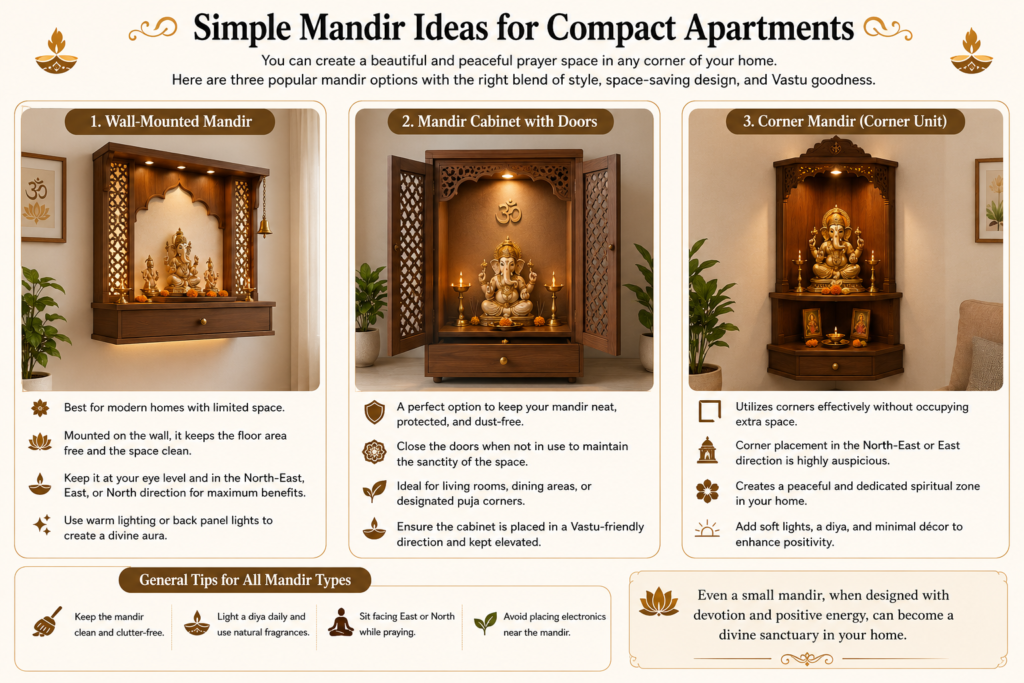
Modern apartments may have limited space, but you can still create a beautiful spiritual corner.
Go Vertical
Install a wall-mounted mandir to save floor space.
Use a Living Room Corner
Separate the prayer area using decorative jali partitions.
Add Accent Lighting
A small spotlight or warm LED instantly enhances the sacred feel.
Common Mandir Vastu Mistakes to Avoid and Their Solutions
Using the Mandir for Storage
Avoid keeping bills, keys, or random items in the pooja space.
Facing South While Praying
This direction is generally avoided in Vastu worship practices.
Installing Oversized Idols
Keep idols under 7–8 inches for home mandirs.
Final Thoughts
At its core, Vastu Shastra is not about fear, superstition, or rigid rules, it is a timeless practice focused on creating balance, harmony, and positive energy inside your home. A thoughtfully placed mandir helps transform an ordinary corner into a peaceful spiritual sanctuary where the mind feels calm and the atmosphere feels uplifting.
According to Vastu principles, placing the mandir in the North-east, East, or North direction helps attract positivity, mental peace, and spiritual stability. Along with the right direction, maintaining cleanliness, proper lighting, fresh flowers, and a clutter-free environment around the pooja area plays an equally important role in preserving positive vibrations.
Even in modern apartments and compact homes, a beautifully designed prayer corner can become the heart of the house when planned correctly. Today, many homeowners prefer stylish and space-saving mandir setups that blend spirituality with modern interiors through premium metal furniture online solutions that combine durability, elegance, and functionality.
Remember, a mandir is not just a decorative element ,it is a space of devotion, peace, and emotional connection. Small changes in placement, design, and daily rituals can bring a noticeable sense of calmness, harmony, and positivity into everyday life.
Also Read:
- Top 20 Vastu Plants for Home for Health, Peace & Growth
- 10 Trending Bedroom Wall Colour Combinations for a Stylish Home
Frequently Asked Questions (FAQs)
Q1: Can we place a mandir in the bedroom?
It is best avoided. However, in studio apartments or single-room homes, place the man in the North-East corner and cover it with a curtain while sleeping.
Q2: Which material is best for a home temple?
Wood is traditionally the most preferred material. Marble and polished metal are also excellent options.
Q3: Can we keep photos of deceased ancestors in the mandir?
No. Ancestor photographs should be placed separately, preferably on a south wall, not alongside deities.